The Mathematics of Survival
Introduction: Where Algebra Meets Survival
When we think of emergency preparedness, we often picture wilderness survival skills or rural homesteads. However, the most critical element of long-term disaster readiness isn't a physical tool—it is basic mathematics. Designing a one-year emergency food storage plan is fundamentally an optimization problem involving multi-variable constraints, system rates, and algebraic ratios.
Let $C_d$ be the required daily caloric intake per person, and $t$ be the time in days. The total energy boundary condition $E_{total}$ required to sustain life is modeled by:
$E_{total} = C_d \times t$
For a single adult over one year ($t = 365$), assuming a baseline survival threshold of $C_d = 2,000\text{ kcal/day}$, our absolute minimum constraint is:$E_{total} = 2,000 \times 365 = 730,000\text{ kcal}$
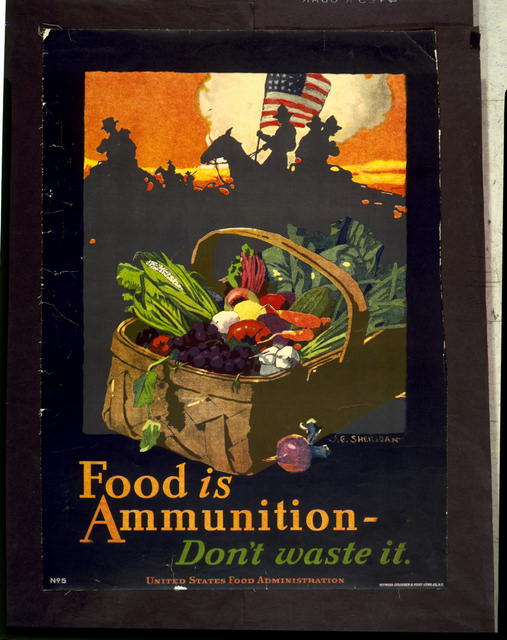
If your variables are unbalanced—say, you have plenty of protein but insufficient overall energy density—the system fails. Your body behaves like an unbalanced equation, burning its own muscle tissue to make up the dynamic caloric deficit. Let's look at how a common food storage scenario falls short on the math, and how we can recalculate the inventory for mathematical and biological balance.
The Danger of Improper Ratios: A 1,200-Calorie Trap
Consider a standard baseline survival recommendation often found online: 150 lbs of rice, 20 lbs of lentils, 10 lbs of chickpeas, and 5 gallons of vegetable oil per person for a year. On the surface, the nutritional synthesis looks perfect. Rice and legumes create a complete amino acid profile (protein), the oil offers vital lipids, and a daily multivitamin prevents scurvy and micronutrient crashes.
But when we calculate the real energy yields by mass, a dangerous structural deficit emerges:
| Food Item | Mass / Volume | Total Energy (kcal) | Daily Yield (365 Days) |
|---|---|---|---|
| White Rice | 150 lbs | ~245,000 kcal | ~670 kcal / day |
| Dry Lentils | 20 lbs | ~32,000 kcal | ~88 kcal / day |
| Dry Chickpeas | 10 lbs | ~16,400 kcal | ~45 kcal / day |
| Vegetable Oil | 5 gallons | ~151,000 kcal | ~414 kcal / day |
| Total Calculated Yield | - | ~444,400 kcal | ~1,217 kcal / day |
Deconstructing the Commercial "Survival Bucket"
A highly popular alternative to raw goods is purchasing commercial freeze-dried kits, often sold under headings like "120 Servings Emergency Bucket." To a consumer browsing options, "120 servings" sounds like it could easily feed a household for months. However, in emergency food logistics, "servings" are a unit of portion volume, not a unit of net energy.
If we apply standard boundary constraint math to a typical 120-serving entrée bucket, the true specifications look like this:
- Total Net Energy Content ($E_{total}$): ~24,540 Calories
- Mean Energy Per Serving: ~204.5 kcal (roughly 1/3 of a standard human meal portion)
Plugging this into our time-duration formula ($t = E_{total} / C_d$), we calculate the true operational lifespan of a single bucket for one adult:
- High Exertion / Active Target ($C_d = 2,000\text{ kcal/day}$): $t = 24,540 / 2,000 = \mathbf{12.2\text{ Days}}$
- Sedentary Restrictive Target ($C_d = 1,500\text{ kcal/day}$): $t = 24,540 / 1,500 = \mathbf{16.3\text{ Days}}$
The math dictates that a 120-serving commercial bucket is effectively a two-week survival tool for a single adult. Sourcing a full year of energy fuel solely from these premium freeze-dried products requires an inventory coefficient of roughly 30 total buckets.
Commercial Buckets vs. DIY Bulk: The Efficiency Coefficient
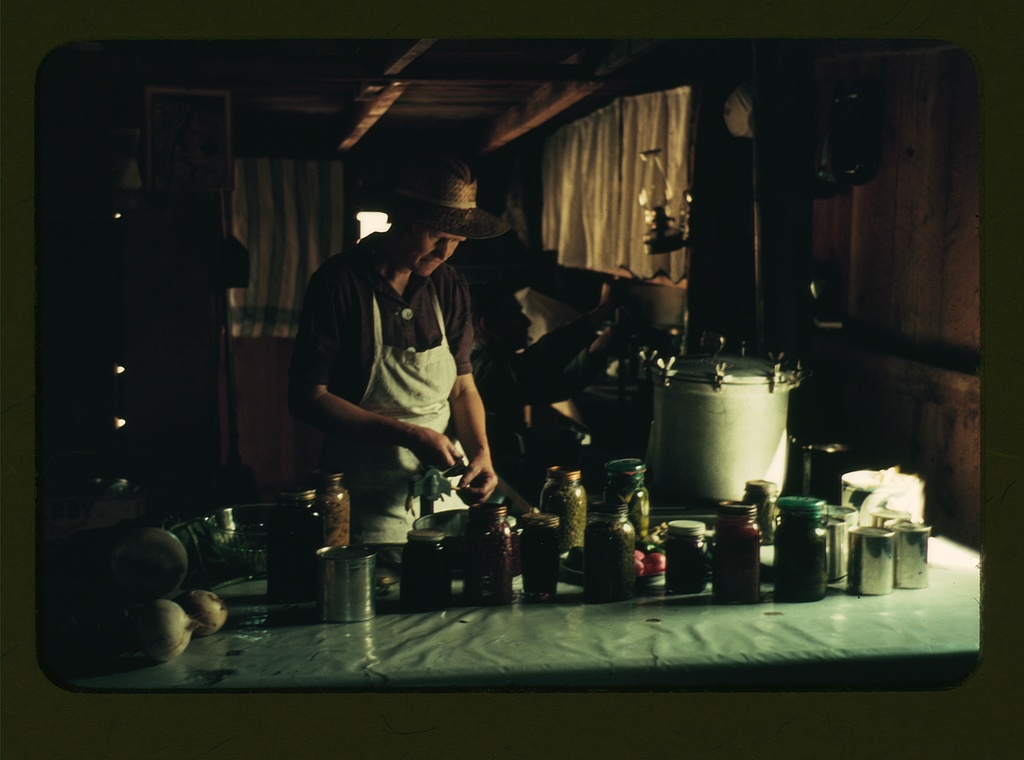
By shifting to a DIY Bulk Storage Model utilizing white rice, all-purpose flour, rolled oats, and dry legumes, you radically optimize the physical and economic variables of your survival system. Sourcing these fundamental staple ingredients in bulk quantities scales down your total acquisition cost dramatically compared to premium-packaged freeze-dried meals—while simultaneously compressing the physical volume required in your storage area. You save a substantial amount of capital by sourcing these base staples in large quantities and packaging them yourself, rather than paying for the manufacturing and packaging overhead wrapped up in pre-packaged buckets.
Caloric Inventory Matrix of the Bulk Strategy
Let's look at the raw mathematical yield of the $465\text{ lbs}$ optimized dry goods blueprint, evaluating exactly how much kinetic potential energy is locked inside the system:
| Staple Food Component | System Mass ($m$) | Energy Density ($kcal/\text{lb}$) | Total Capital Energy ($E$) |
|---|---|---|---|
| Long Grain White Rice | 150 lbs | ~1,630 kcal / lb | 244,500 kcal |
| All-Purpose Flour | 100 lbs | ~1,650 kcal / lb | 165,000 kcal |
| Rolled Oats | 50 lbs | ~1,700 kcal / lb | 85,000 kcal |
| Dry Legumes (Lentils, Beans, Chickpeas) | 75 lbs | ~1,550 kcal / lb | 116,250 kcal |
| Pure Vegetable Oil / Shortening | 60 lbs (8 Gal) | ~4,000 kcal / lb | 240,000 kcal |
| Granulated Sugar and/or Honey | 15 lbs | ~1,750 kcal / lb | 26,250 kcal |
| Total System Reserve | ~465 lbs of dry goods | Net Avg: ~1,886 kcal / lb | ~877,000 kcal |
With a baseline inventory containing $E_{total} = 877,000\text{ kcal}$, we can compute the real temporal safety margin ($t$) across varying human metabolic demand states ($C_d$):
- High Exertion / Active Labor ($C_d = 2,400\text{ kcal/day}$):
$t = 877,000 / 2,400 = \mathbf{365.4\text{ Days}}$ (A precise 1-year operational runway under heavy load) - Standard Active Baseline ($C_d = 2,000\text{ kcal/day}$):
$t = 877,000 / 2,000 = \mathbf{438.5\text{ Days}}$ (A 73-day structural safety buffer) - Sedentary / Restrictive Rationing ($C_d = 1,500\text{ kcal/day}$):
$t = 877,000 / 1,500 = \mathbf{584.6\text{ Days}}$ (Over 1.6 years of physiological preservation)
The Storage Life Vector: 25-Year Preservation Chemistry
A frequent objection to bulk raw storage is that open bags of flour and rice spoil rapidly, falling prey to oxidation, moisture degradation, and weevil infestation. However, applying basic environmental controls eliminates these decay variables entirely, matching the 20-to-25-year shelf life of commercial freeze-dried kits.
To establish an infinite-loop seal on bulk dry goods, the storage equation requires three physical components:
- High-Barrier Mylar Bags (7-Mil Minimum): Standard plastic buckets are gas-permeable over multi-year vectors. Metallized Mylar acts as an absolute physical wall blocking light and atmospheric gas transmission.
- Oxygen Absorbers (O2 Scavengers): Dropping iron-powder formulations inside the Mylar container chemically locks up all existing oxygen, dropping atmospheric concentration down to less than 0.01%. This permanently prevents lipid oxidation (rancidity) and completely halts the life-cycle of any latent biological pests.
- Food-Grade 5-Gallon Buckets: These serve as the rigid physical exoskeleton protecting the inner Mylar membrane from punctures, stack loads, and external rodents.
Defeating Appetite Fatigue: The Chemistry of Flavor
In long-term survival scenarios, human psychology introduces an unexpected variable: appetite fatigue. Eating plain, unseasoned starches day after day causes sensory monotony, which can make the body physically reject food. To solve this, your emergency storage requires small, highly concentrated additions of acids, spices, and umami agents.
Essential Low-Mass Accent Elements:
- A versaitle addition to many meals: Chicken bouillon powder. Turns bland meals into flavorful main dishes. <
- The Savory Backbone: Onion powder li>The Savory Backbone: Onion powder and garlic powder. Dehydrated powders bypass the quick shelf-life decay rates of fresh alliums while preserving molecular flavor profiles.
- The Kinetic Kick: Whole black peppercorns (stored with a mechanical hand grinder) and chili powder. Capsaicin and piperine stimulate chemical heat receptors on the tongue, changing sensory perception.
- The Acidity Variable: White vinegar, apple cider vinegar, or crystallized lemon juice powder. Acidity brightens flat starchy flavors by cutting through heavy fats and activating salivation.
- The Umami Multipliers: Soy sauce, Worcestershire sauce, and tomato powder. These supply free glutamates, which signaling pathways interpret as rich, savory, and satisfying.
Survival Kitchen Formulations
Utilizing our primary storage assets alongside common, shelf-stable pantry elements, you can prepare distinct, texturally diverse meals:
The Math: Converts flour mass into immediate, usable, high-density fuel without waiting for fermentation time vectors.
- Base Matrix: 1 cup flour, 1 tbsp vegetable oil, big pinch of salt, ~1/3 cup warm water.
- Execution: Combine dry variables, then incorporate liquid variables into a uniform dough matrix. Knead for 120 seconds to align the gluten polymer chains. Rest for 15 minutes. Divide into small spheres, roll or press exceptionally thin, and sear on a dry, radiating-hot skillet for 60 seconds per side.
The Math: Pairs specific amino acid chains from grains and legumes to yield a complete structural protein.
- Base Matrix: 1/2 cup rice, 1/4 cup lentils, 1.5 tbsp vegetable oil, bouillon broth.
- Pantry Modifiers: 1 thin-sliced onion, 1 tsp cumin powder, black pepper.
- Execution: Simmer lentils in bouillon water until partially hydrated. Concurrently, heat the oil in a separate pan and slowly fry the sliced onions until deeply caramelized (converting starches to sugars). Toast the rice and cumin directly in the hot pan for 30 seconds, add the lentils with their cooking liquid, seal with a lid, and simmer until the liquid is fully absorbed. Top with caramelized onions.
The Math: Transforms basic fat and carbohydrate variables into a high-viscosity, high-calorie liquid that makes dry biscuits or plain rice highly palatable.
- Base Matrix: 2 tbsp oil, 2 tbsp flour, 1.5 cups water, 1 tsp chicken bouillon powder.
- Execution: Create a standard roux by heating the oil and whisking in the flour over low heat for 2 minutes to eliminate raw starches. Slowly introduce the water-bouillon mixture while stirring continuously. Simmer for 3 to 5 minutes until the starches gelatinize, forming a thick, savory sauce.
The Chemistry of Leavening: Baking Soda Logistics
While flatbreads are an exceptionally efficient way to convert raw mass into immediate survival fuel, long-term culinary sustainability requires an understanding of chemical leavening vectors. Without a lifting agent, repeated consumption of dense starches can impact digestion and accelerate appetite fatigue. Introducing pure Baking Soda (Sodium Bicarbonate, $NaHCO_3$) into your storage equation unlocks the ability to create light, porous breads, biscuits, and cakes.
Baking soda is a base. To release carbon dioxide gas ($CO_2$) and create lift, it must react with an acid. In a controlled pantry environment, this chemical reaction follows the thermodynamic model:
$NaHCO_3 \text{ (Base)} + H^+ \text{ (Acid)} \rightarrow Na^+ + H_2O + CO_2 \uparrow \text{ (Gas Bubble Lift)}$
Because commercial baking powder degrades within 1 to 2 years due to built-in starches absorbing ambient moisture, storing pure baking soda alongside shelf-stable dry acids (like cream of tartar or citric acid powder) is the mathematically superior long-term strategy. Pure baking soda possesses an **infinite chemical shelf life** if protected from atmospheric moisture vectors.Preservation Protocol for Baking Soda
To preserve your chemical leavening assets for 20+ years, you must eliminate environmental exposure:
- Isolate from Humidity: Remove baking soda from its original permeable cardboard boxes. Divide it into small glass mason jars or heat-sealed 7-mil Mylar bags.
- Omit Oxygen Absorbers: Never pack baking soda with iron-powder oxygen absorbers. It contains no lipids to oxidize, and the changing pressure profiles inside the sealed container can compress the powder into a brick. A simple airtight seal with a desiccant moisture packet is structurally optimal.
The Math: Employs precise fractional measurements to balance the base-acid ratio, preventing a bitter, unreacted sodium profile in the finished bread matrix.
- Dry Asset Mix: 2 cups all-purpose flour, 1/2 tsp pure baking soda, 1/2 tsp citric acid powder (or 1 tsp cream of tartar), 1/2 tsp iodized salt.
- Liquid Asset Mix: 3 tbsp vegetable oil (or melted shortening), ~3/4 cup water.
- Execution: Whisk the dry elements meticulously to distribute the sodium bicarbonate molecules evenly throughout the starch. Pour in the oil and water. Stir gently for 30 seconds just until a soft dough matrix coalesces—over-mixing will over-develop the gluten, destroying the delicate cell structures created by the $CO_2$ gas. Press the dough to a 3/4-inch thickness, cut into rounds, and bake in a covered skillet or Dutch oven over your heat source for 12–15 minutes until light and airy.